Markets Don’t Begin at the Checkout
Why the Most Important Consumer Decisions Are Made Long Before Anyone Buys Anything
An Ordinary Saturday Afternoon
Most conversations about consumer spending begin with numbers: retail sales, inflation, household expenditure, consumer confidence, and purchasing power. They tell us what people buy, how much they spend, and whether demand is rising or slowing. More often than not, they explain markets after movement has already become visible.
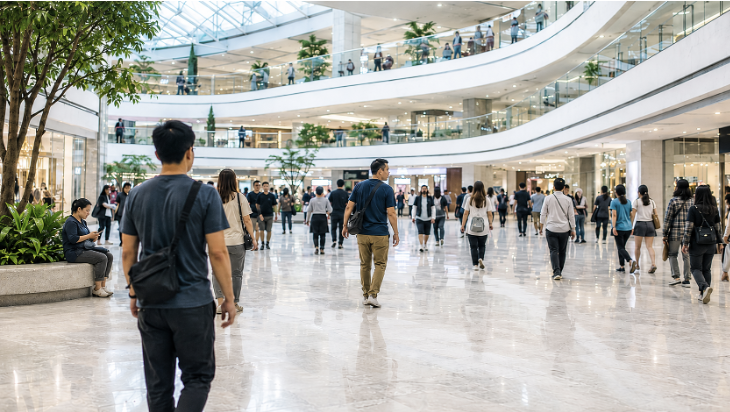
Mine began with an ordinary Saturday afternoon at a shopping mall.
I wasn’t looking for consumer behaviour or trying to make sense of the economy. I simply had a few hours before another appointment and decided to walk around. There was no shopping list, no intention to buy anything, and no particular destination beyond seeing where the afternoon happened to take me.
Nothing about the mall felt unusual. Families drifted between stores carrying shopping bags. Young couples stood outside restaurants, changing their minds more than once before deciding where to eat. A newly opened matcha store had a queue that barely seemed to move. Cafés were busy enough that finding a table required patience, while a local perfume boutique, selling products most people would probably consider non-essential, was unexpectedly full.
It looked exactly as a shopping mall should on a weekend, which may have been why I almost missed what was happening.
The longer I stayed, the less interested I became in what people were buying and the more curious I became about how they were spending their time. Some visitors entered a store, looked around quietly for fifteen minutes, and left empty-handed. Others compared products with remarkable patience before placing everything back on the shelf. A few walked with purpose, while many seemed content to wander until something genuinely caught their attention.
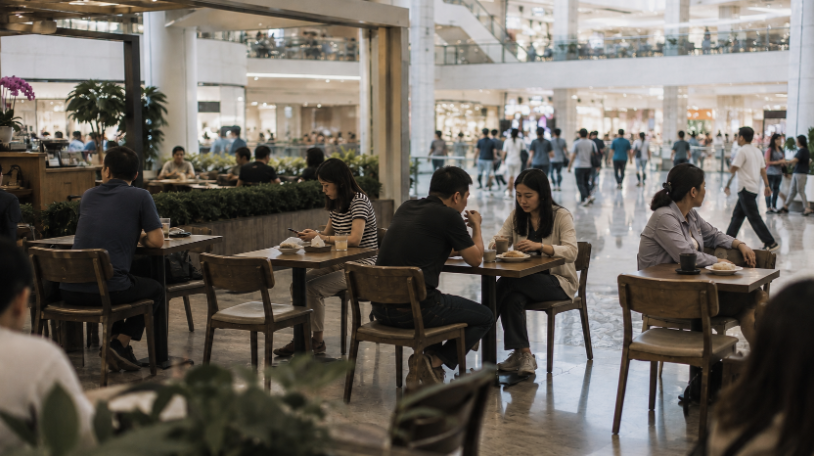
I found myself watching the cafés more than the stores. Every table was occupied, yet very few people looked as though they had come simply for coffee. Some were working with laptops open in front of them. Others were deep in conversation. A few sat alone, moving between a presentation on their screen, a notebook, and the cup beside them. Everyone had ordered roughly the same thing, but the reason they were there appeared remarkably different.
Further down the corridor, a running store held my attention for similar reasons. Customers tried on different shoes, walked a few careful laps, compared prices, asked friends for opinions, and occasionally started the whole process again with another pair. Nobody appeared rushed. Choosing seemed to matter every bit as much as buying.
Without realising it, I had stopped observing the stores themselves. What interested me was the rhythm behind people’s decisions: how long they stayed, what made them hesitate, and what seemed worth both their attention and their money.
Nothing I saw was extraordinary. If anything, its ordinariness was precisely what stayed with me.
Over the following days, that afternoon kept returning to mind. Not because shopping malls are particularly fascinating places, but because I couldn’t quite square what I had seen with the conversations happening almost everywhere else.
The story being repeated everywhere sounded familiar. Consumers were becoming more cautious. Rising living costs were forcing households to prioritise. Businesses were preparing for slower growth. Headlines described people thinking twice before spending money on anything that wasn’t strictly necessary.
None of those observations felt inaccurate. Neither did what I had seen.
The more I thought about it, the less those two realities felt like contradictions. They seemed to describe different layers of the same story. One reflected the economic environment. The other revealed how people were quietly adapting within it.
Looking Beyond the Purchase
Eventually my thoughts returned to an idea economists have discussed for decades: the Lipstick Effect.
The premise is straightforward. During periods of economic uncertainty, consumers often postpone larger purchases while continuing to spend on smaller indulgences that are still small enough to feel affordable. Rather than eliminating discretionary spending altogether, they become more selective about where they continue to find enjoyment, comfort, or personal reward.
It is a useful observation, and it has endured because it often describes something real. Yet the more I thought about that Saturday afternoon, the more I wondered whether it explained the whole story.
It certainly described what people continued buying. I was less certain that it explained why those purchases continued to matter.
A busy café can easily be read as evidence that people are still willing to spend money on coffee. That conclusion isn’t wrong, but it feels incomplete. Some customers may genuinely have wanted coffee. Others appeared to be borrowing a workspace for a few hours, catching up with friends they hadn’t seen for weeks, or simply looking for somewhere to sit that was neither home nor the office.
They all ordered roughly the same drink, but they weren’t necessarily buying the same experience.
The perfume boutique stayed with me for much the same reason. Several visitors spent a surprising amount of time exploring different fragrances before leaving without buying anything. Judged purely as a retail transaction, those visits might appear unsuccessful. Standing there, however, they didn’t feel unsuccessful at all. People were discovering, comparing, testing, and quietly deciding whether something genuinely belonged in their lives.
Whether they bought a bottle that afternoon seemed almost secondary to the process they were going through.
The running store offered another perspective. Customers tried on shoes, discussed alternatives, checked prices, walked around the store, and sometimes left with nothing more than a clearer understanding of what they wanted. Nothing about the process suggested impulsive spending. If anything, people appeared to be taking greater care before deciding what still deserved a place in their lives.
The longer I reflected on those moments, the less interested I became in the transaction itself and the more curious I became about everything surrounding it. By the time someone reaches the cashier, much of the real decision has already happened somewhere else.
The question, then, is whether we sometimes begin reading markets from the wrong end.
Where Markets Really Begin
Many discussions about consumer behaviour begin with the purchase itself. Which products are people still buying? Which categories seem to be holding up better than others? Which brands continue to perform despite growing economic pressure?
They are reasonable questions, but they all begin at the transaction. By then, however, much of the important decision has already been made.
Nobody decides to spend an afternoon in a café while standing at the cashier. Nobody discovers an interest in running after trying on a pair of shoes. Even stepping into a perfume boutique usually begins long before someone reaches for a bottle on the shelf.
Those decisions usually begin somewhere else. They emerge from routines that slowly evolve, priorities that quietly shift, and countless small adjustments people make as they adapt to changing circumstances.
Perhaps that was why the afternoon remained so vivid in my mind. The products themselves had changed very little. Coffee was still coffee, running shoes were still running shoes, and perfume remained exactly what it had always been. What seemed different was the place those products quietly occupied in people’s lives.
A cup of coffee might once have been little more than something to drink between meetings. Today it can also become a temporary office, a place to reconnect with friends, a quiet corner to think, or simply a reason to spend an hour somewhere that feels different from home. The product hasn’t fundamentally changed, but its role has expanded.
Running offers another example. A pair of shoes is still designed to support movement, yet for many people it has become part of something much broader. It may represent a commitment to better health, a weekly ritual shared with friends, a way of creating structure in increasingly crowded schedules, or simply an excuse to spend more time outdoors after long days in front of a screen.
None of those motivations begins inside a retail store. They arrive there after taking shape in everyday life.

The same pattern can be found far beyond cafés, sportswear, or fragrance. Products rarely become more relevant because their physical attributes suddenly improve. More often, they become relevant because they begin serving a different purpose within people’s routines.
When that happens, demand appears to shift even though the product itself remains largely unchanged.
Seen from that perspective, the Lipstick Effect begins to feel less like the explanation and more like what eventually becomes visible. By the time we notice consumers continuing to spend in certain categories, something quieter has often been unfolding for much longer.
Daily routines have already adapted, priorities have been rearranged, and expectations have changed. Products that once solved one problem gradually begin solving another, often without businesses noticing until the shift finally appears in sales reports.
The purchase is where that longer journey becomes visible.
Perhaps that is why consumer behaviour can sometimes appear to change overnight. A category suddenly gains momentum, a familiar product feels newly relevant, or a business unexpectedly finds itself benefiting from an emerging trend.
Yet very little of that actually happens overnight. Most of it begins quietly, long before anyone gives it a name.
Reading Markets Through Everyday Life
Looking back, I don’t think that Saturday afternoon was really about shopping. It was about watching people adapt, not dramatically and probably not consciously, but through hundreds of ordinary decisions that rarely attract attention on their own.
Someone chooses to work from a café instead of going straight home. Someone protects a Saturday morning run despite an increasingly crowded week. Someone spends half an hour exploring fragrances without feeling any urgency to buy one.
None of those moments seems particularly significant in isolation. Together, however, they begin to reveal something larger.
Markets are usually interpreted through transactions because transactions are easy to measure. Receipts, sales figures, market share, and category growth all tell us that something has happened. Very few tell us where it actually began.
To answer that, we have to look earlier.
What quietly changed in someone’s life before a familiar product became worth buying again? Why does a café become a workspace instead of simply somewhere to drink coffee? Why does running become important enough to justify investing in better shoes? Why can someone spend half an hour discovering different fragrances, leave without making a purchase, and still feel the visit was worthwhile?
These aren’t really questions about products. They are questions about people, and about how they adjust their routines as the world around them changes.
Consumer behaviour only becomes visible after those adjustments have already taken place. By the time businesses begin talking about changing demand, consumers may have been living that change for months.
Perhaps that is the more useful lesson behind discussions about the Lipstick Effect. The interesting story isn’t simply that people continue spending on small indulgences during uncertain times. We have understood that for decades.
The more interesting question is why certain products continue earning a meaningful place in people’s lives while others quietly lose theirs.
That answer rarely begins at the checkout. It begins much earlier, in the small and largely invisible adjustments people make as they navigate everyday life. Markets eventually reflect those changes, but they don’t create them.
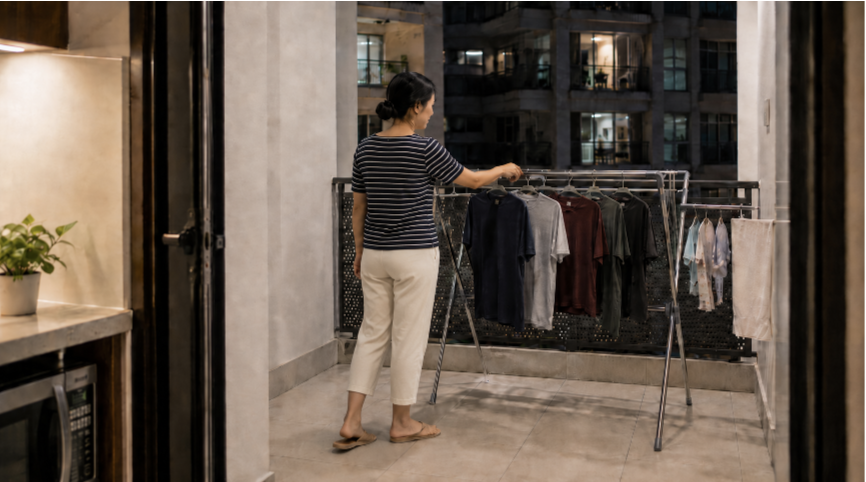
Looking back, I still think about that ordinary Saturday afternoon from time to time. Not because there was anything extraordinary about it, but precisely because everything felt so ordinary that it was easy to overlook.
Nothing announced itself as an insight. There was no dramatic shift or obvious pattern waiting to be discovered, and certainly no indication that an afternoon spent wandering through a shopping mall might eventually change the way I thought about consumer behaviour.
Perhaps that is how markets usually change.
Not through dramatic moments that demand our attention, but through countless ordinary moments that quietly reshape the way people choose to live. By the time those changes become visible in sales reports or economic indicators, they have already become part of everyday life.
Markets don’t begin at the checkout. They begin much earlier, in lives that are constantly adapting, often so gradually that neither consumers nor businesses notice the change until it is already well underway.