When Reinvention Breaks Recognition
What Jaguar's Transformation Reveals About How Established Brands Can Evolve Without Losing Recognition

The greatest risk in transformation is not that customers dislike what is new. It is that they no longer recognise what was valuable.
For younger brands, change can create definition. There is often little history to protect and few expectations to disrupt. Established brands face a different challenge because every significant change enters a relationship already shaped by years, sometimes generations, of accumulated experience.
Markets evolve, technologies advance, and customer expectations shift. Transformation may be necessary, but progress alone is not enough. An established brand must move forward without weakening the recognition that earned people's trust in the first place.
Jaguar's recent transformation brings this tension into view. Beyond the debate surrounding its new identity lies a broader question for every organisation whose name already carries history, familiarity, and meaning.
How should an established brand evolve without leaving its recognition behind?

Recognition Is Built Before It Is Tested
Recognition is often confused with awareness. Awareness means knowing that a brand exists. Recognition means sensing what belongs to it.
It develops through repeated encounters with details that gradually form a coherent pattern: a silhouette, a proportion, a distinctive sound, a retail environment, a product experience, and a consistent way of communicating. Individually, these signals may seem insignificant. Together, they teach customers what to expect, often without requiring conscious analysis.
Over time, people stop remembering the elements separately and begin to recognise the brand as a whole. This is why strong brands can feel familiar before their name is even visible. Their signals have become coherent enough to create expectation.
That expectation carries commercial value because familiarity reduces uncertainty. It gives customers a sense of orientation before rational comparison begins. They may still examine price, features, quality, or performance, but recognition has already shaped how confidently they approach the decision.
For established brands, this confidence is not created by a single campaign or moment of visibility. It accumulates gradually through consistency, which is precisely why it is easy to overlook until it is disrupted.
Brands Accumulate Memory, Not Just Awareness
Organisations often experience branding as a sequence of initiatives: a new campaign, a product launch, a redesigned identity, or a refreshed retail environment. Customers do not separate these moments so neatly.
They experience the brand as a continuous accumulation of impressions. Most are too ordinary to recall individually, yet together they create a stable sense of what the brand represents and how it is expected to behave.
That memory extends far beyond visual identity. It includes how a product feels, how employees interact, how the organisation responds when something goes wrong, how communication sounds, and how consistently decisions reflect the character customers have come to know.
Memory, in this sense, is not an archive of past expressions. It is a living pattern, constantly reinforced, extended, or altered by every new experience.
The longer a brand has existed, the more extensive this accumulated memory becomes. Established brands therefore never begin transformation from a blank page, even when internal teams would prefer to think they do. Every new decision enters an existing relationship that already carries meaning.
The opportunity is not simply to create something different. It is to ensure that the difference still feels as though it belongs.
Evolution Is Different From Reinvention
Every brand eventually encounters pressure to change. New technologies reshape categories, customer expectations evolve, competitive signals shift, and what once felt modern gradually becomes familiar. Change may become necessary, but not every form of change works the same way.
Evolution allows a brand to expand while preserving enough continuity for people to remain oriented. Reinvention often begins by replacing what came before. Both may create something new, but only one actively protects the relationship already built.
When familiar signals evolve with a recognisable logic, customers can connect the new expression to what they already know. The brand moves forward, but recognition travels with it. When too many signals disappear simultaneously, customers must work harder. They are no longer interpreting only a new identity. They are trying to locate the brand they remember within it.
This does not mean every historical symbol must remain unchanged. Heritage should not become a constraint that prevents progress. It means continuity must be designed deliberately, with a clear understanding of which meanings should be carried forward and how they can remain visible in a new context.
A brand can change its visual language, product experience, tone, or market ambition without becoming trapped by its past. The real question is whether those changes still express a recognisable logic.
Successful evolution does not ask customers to forget what came before. It gives them a new way to recognise it.
What Jaguar Reveals About Every Established Brand
Inside an organisation, transformation is rarely sudden. It may follow months or years of strategic discussion, in which leadership teams assess changing markets, competitive pressure, technological developments, cultural shifts, and long-term business ambition. Each decision is supported by reasoning that may appear entirely coherent from within the organisation.
Customers do not experience that reasoning. They encounter only its outcome.
A familiar silhouette changes, established cues disappear, and a different tone begins to emerge. The organisation understands the intention behind those choices. The customer experiences the distance between what was previously known and what is now being presented.
The question customers ask is often much simpler than the one leadership has spent months trying to answer.
Does this still feel like the same brand?
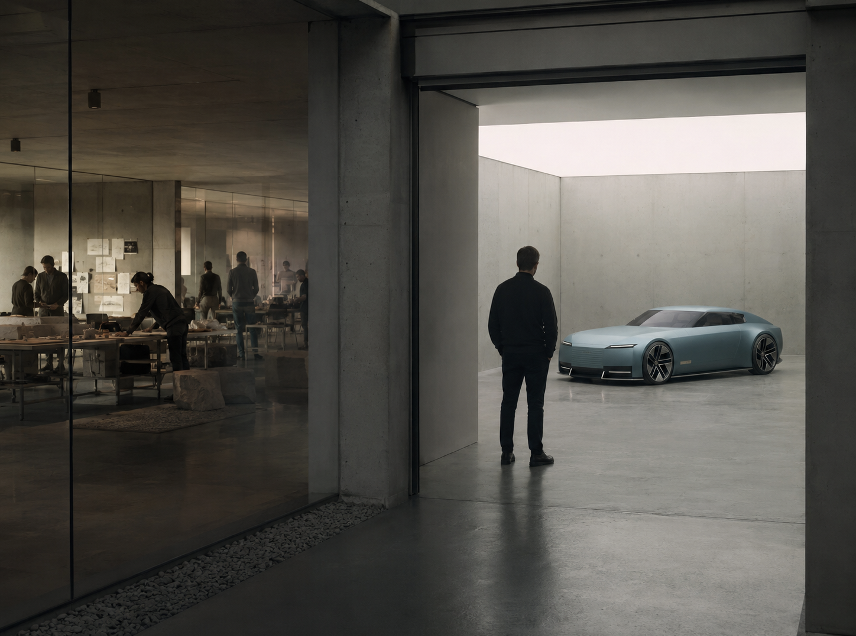
Jaguar's recent transformation makes that tension visible. Public discussion quickly moved beyond typography, logos, and individual design choices. Much of the reaction concerned something less tangible: whether the emotional connection associated with Jaguar remained present beneath its new expression.
This is what makes the case relevant beyond the automotive category. Transformation is often judged internally by the strength of its future ambition. Externally, it is also judged by whether people can connect that ambition to the brand they already know.
Whether Jaguar's transformation ultimately succeeds will depend on more than its launch moment. New products, experiences, performance, and consistency will shape how the direction is understood over time.
The broader lesson is this:
A brand is not recognised simply because it retains its name. Recognition survives when people can still locate the meaning they once associated with it.
Recognition Is Easier To Lose Than To Rebuild
People often underestimate the economic asymmetry of recognition.
An organisation can redesign its identity, launch a new positioning, or replace an entire communication system within months. Rebuilding the recognition weakened by those decisions rarely follows the same timeline.
Recognition develops through repeated experience. It accumulates across products, interactions, communication, and countless moments that gradually reinforce what customers have come to expect. Once that continuity is disrupted, confidence must be rebuilt one experience at a time.
This is why recognition behaves less like a communication outcome and more like a long-term business asset. It may not appear on a balance sheet, yet rebuilding it can require years of consistent delivery rather than a single successful campaign.
Transformation therefore involves more than creating something new. It requires understanding the economic value of what already exists before deciding what should change.
The Question Every Leadership Team Should Ask
Every established brand will eventually need to evolve. Markets change, technologies reshape behaviour, and new competitors alter expectations. Remaining static may protect familiarity for a time, but eventually it creates a different risk: recognition without relevance.
The answer is not to avoid change. It is to understand what the change must carry forward.
Many organisations treat heritage as an obstacle to progress. More often, heritage represents accumulated recognition that competitors cannot easily reproduce. Its value does not live only in historical archives, founding stories, or famous symbols. It lives in the expectations people continue to attach to the brand.
Customers do not expect established brands to remain unchanged forever. They understand that progress is necessary. What they hope to preserve is the confidence that the brand they trusted is still present within what it is becoming.
Every organisation will ultimately choose its own path. The right balance will depend on its category, customers, ambition, and competitive reality. Yet the central question remains consistent.
Not only: what should we become?
But: when we get there, what must people still recognise?
Transformation may create attention.
Recognition is what sustains confidence.